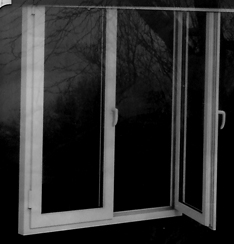
Even a well-built window resists heat far less than the insulated wall around it. That does not make windows a flaw; they provide daylight, view, and ventilation. It does mean their performance is worth understanding, especially in a climate with a long heating season.
Layers of glass
Single glazing is a single pane and offers little resistance to heat flow. Double glazing adds a second pane with a sealed cavity between them, and triple glazing adds a third. Each additional pane and cavity slows conductive and convective heat transfer through the assembly.
Coatings and gas fills
- Low-emissivity (low-e) coatings are microscopically thin layers that reflect heat back toward its source, reducing radiant loss through the glass.
- Gas fills such as argon replace air in the sealed cavity with a denser, less conductive gas, further slowing heat flow.
- Warm-edge spacers at the cavity edge reduce the thermal bridge between panes.
Frames matter too
The frame surrounds the glass and conducts heat on its own. Frame materials behave differently: some conduct heat readily while others include thermal breaks or insulating cores. The whole-window rating combines the glass, the spacer, and the frame, which is why a single pane of high-performance glass does not tell the full story.
Repair, retrofit, or replace
Replacing windows is usually one of the costlier envelope upgrades, so it is often weighed against simpler measures first.
- Weatherstripping and caulking around an existing frame addresses air leakage, the subject of air sealing and weatherproofing.
- Interior or exterior storm windows can add a cavity without full replacement.
- Full replacement is generally considered when frames are failing or seals have broken, shown by persistent condensation between panes.
Because the decision depends on the condition of each window and the rest of the envelope — including the attic and roof insulation — a qualified installer or energy advisor is well placed to compare the options for a particular home.